
What’s your money blind spot?
What’s ahead
How do I make the most of my tax refund?
Celebrating Financial Literacy Month
What’s your money blind spot?
Showing up: Meet Chase Lambert-Burton
How do I make the most of my tax refund?
Tax season might be stressful, but getting a refund? That part feels good. With a little intention, you can turn that refund into something powerful: a step toward long-term financial wellness.
Here’s how to make the most of your refund:
Pay down high-interest debt. That refund can help you get ahead on credit cards or personal loans. Target balances with the highest interest rates first — paying those down now means saving on interest over time.
Build or boost your emergency fund. If you don’t already have one, this is the place to start. Life is unpredictable, and having 6 months’ worth of living expenses saved in a high-yield savings account can be a game-changer when the unexpected hits.
Invest in your future. Once your essentials are covered, consider using part of your refund to grow your wealth. Whether it’s through a retirement account, a personal investment portfolio, or a platform like Stackwell, investing even a small portion can set you up for long-term gains.
Your refund is your money — already earned. Using it with purpose helps you build the kind of financial foundation that lasts. Future you will thank you.
Celebrating Financial Literacy Month
At Stackwell, we see Financial Literacy Month as a chance for us to change the conversation around outdated personal finance concepts.
Last year, we talked about shifting the focus from financial literacy to financial wellness — and while that may sound like a minor distinction, we’ve found that it actually unlocks a lot. This year, we want to expand the wealth, too.
When wealth is only defined as a number, it’s easy to feel like you’re behind. That framing shows up everywhere — balances, scores, benchmarks that signal whether you’re “on track.” Over time, it shapes how people see themselves. We hear it all the time: “I’m bad with money.” And when that’s the starting point, it’s harder to take action. It’s easier to assume something like investing isn’t for you.
That’s why it’s so important to expand the idea of what wealth can be. When people recognize all the different ways they’re wealthy, it unlocks the confidence to make decisions that improve their financial wellness.
Over the past year, we’ve had the chance to work with more people, in more programs, across more communities — and we’ve seen the impact firsthand. We’ve seen confidence grow alongside portfolios.
“In our communities, we have always figured it out,” Diana Isern, a financial educator with Stackwell, says, “We’ve navigated tight months, raises, family pressures, celebrations, and tough decisions every day. And we’ve done it with resilience, humor, creativity, support, and other forms of wealth that don’t always show up on a budget tracker (or balance sheet). Our experiences are proof that we have exactly what it takes to build wealth and show up in the investing conversation, too. And so we will.”
What’s your money blind spot?
Understanding your finances isn’t just about what you know — it’s also about what you might be missing.
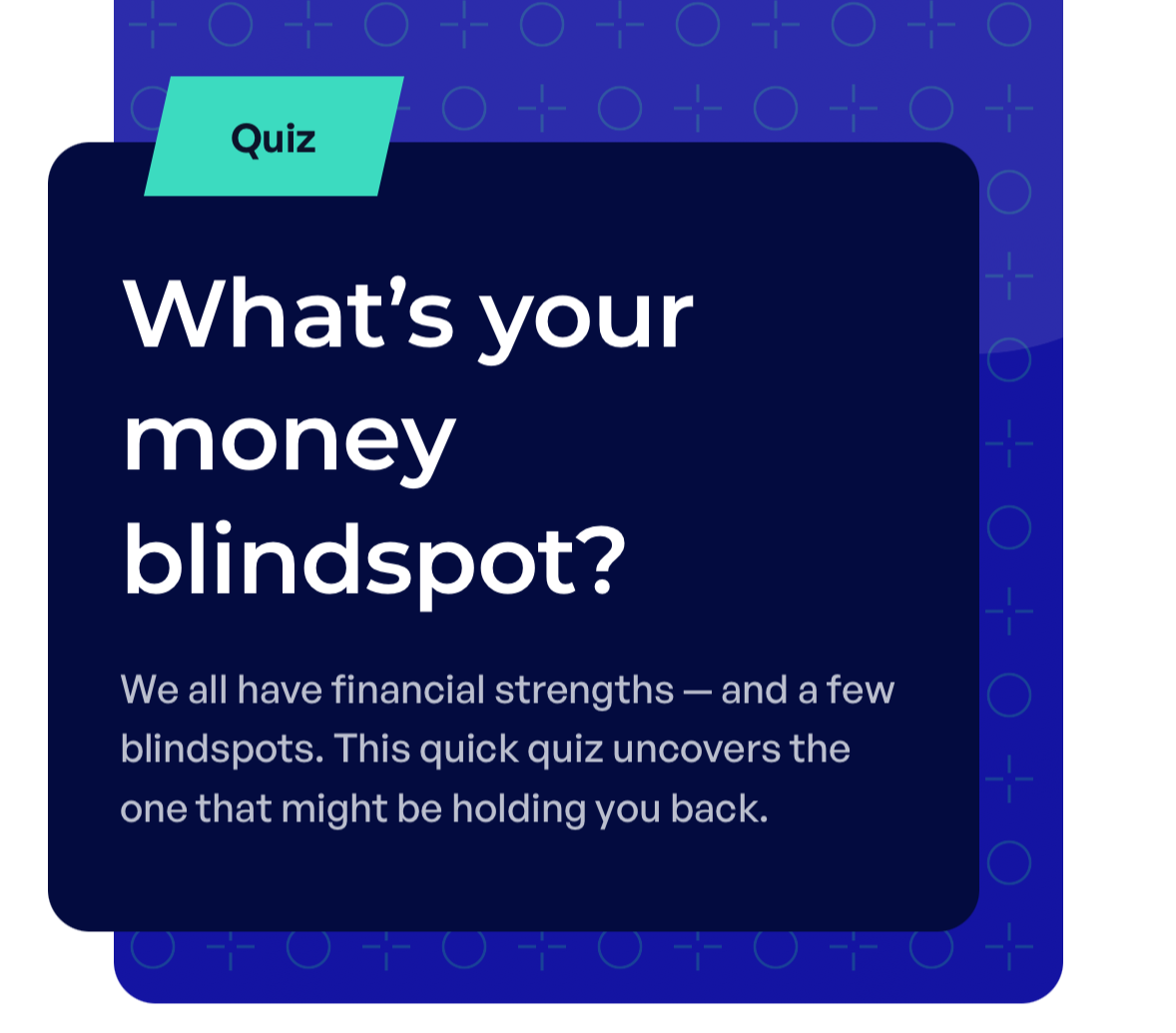
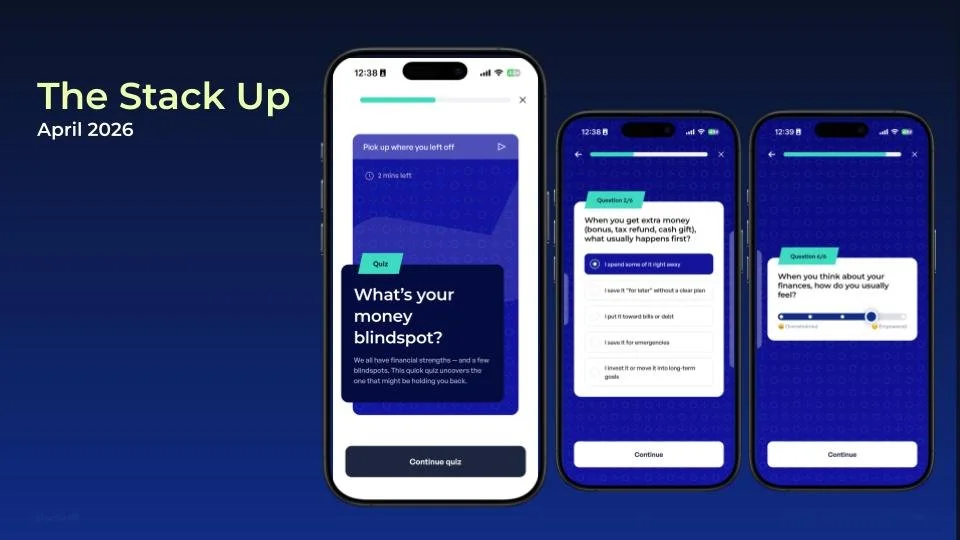
That’s why we launched a new quiz series in the Learning Center, starting with “What’s your money blindspot?” It’s designed to help you quickly uncover patterns in how you think about money, risk, and decision-making, so you can build habits that actually work for you.
Each quiz takes just a few minutes, but the goal goes deeper than that.
“We wanted to take something that could feel complex, like financial habits or risk, and make it feel really approachable,” said Larysa King, our VP of Product. “The goal was always to meet people where they are and give them something that clicks right away.”
You’ll walk away with a clearer sense of your strengths, a better understanding of your tendencies, and a few practical ideas to help you move forward with more confidence. Because sometimes, the biggest unlock isn’t learning something new—it’s seeing yourself more clearly.
Showing up: Meet Chase Lambert-Burton
Some people have a way of making others feel immediately at ease. Not because they’re trying to, but because of how they show up — steady, open, and fully present.
That’s Chase.
Before he joined Stackwell, Chase was already building that approach in a different context. His path wasn’t defined by shortcuts or guarantees. It was defined by consistency — showing up, doing the work, and figuring it out over time.
At Stackwell, that mindset took on a new shape. It turned into ownership, leadership, and eventually a deep role working directly with users who are navigating investing for the first time. Today, Chase helps people move through not just the mechanics of investing, but the mindset shift that comes with it — from hesitation to action. Whether he’s supporting a student’s first investment or watching confidence build over time, Chase sees it as part of a larger promise: helping people feel like they belong in financial spaces that have historically told them otherwise.
His story isn’t about a single breakthrough moment — it’s about what happens when small, consistent actions start to compound.
Read Chase’s Stacker Story.